
PSHE
PSHE Curriculum Intent
Why do we teach our pupils:
Each of our children is a precious and unique individual, with God given talents and abilities, created to fulfil a special role in God’s intricate plan for the world.
‘“For I know the plans I have for you”, declares the Lord, “plans to prosper you and not to harm you, plans to give you hope and a future”.’ Jeremiah 29:11
Vision:
The Trinitarian nature of God means that He has had relationships since before the creation of the world. This is a central aspect of humans being created in his image and therefore ‘Relationships, Sex and Health’ are all crucial aspects of human flourishing.
This curriculum area is fundamental to our vision and ethos (see Ethos policy).
‘Education is far more than an instrument for creating an effective and productive workforce: it exists to open the way to abundance of life.’ p105 Reimagining Britain – Justin Welby
We believe education is not limited to teaching skills and knowledge, but enabling pupils to develop personal deep-seated values which give them the capacity to work together to build flourishing communities.
To fulfil this vision we believe our teaching of PSHE will enable pupils to:
- Maintain a healthy mind and body and live a fulfilled life,
- Have a positive attitude to life-long learning and making the most out of life,
- Flourish through positive relationships which support thriving communities,
- Broaden their horizons and raise their aspirations,
- Realise that there are other views and beliefs and develop respect and tolerance.
What do we want to achieve by teaching PSHE?
- Model healthy life styles and positive relationships
- Ensure pupils know about how to maintain a healthy body and mind
- Enable pupils to respond positively to both encouragement and criticism developing a healthy attitude to learning
- Have high aspirations of what they can achieve and how they can contribute to global communities.
PSHE FRUITS
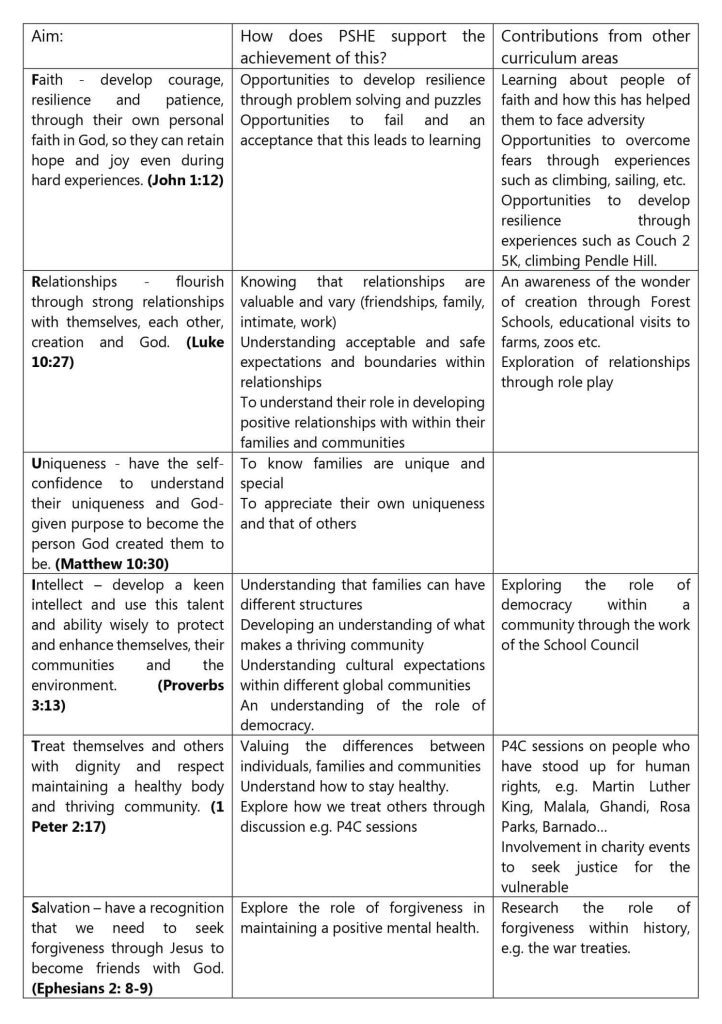
Discover what St Leonard’s students are learning — click the blue links below to view our PSHE curriculum.
Whole school PSHE overview
Overview of Units – My Happy Mind
PSHE Progression Of Skills
Progression of skills – My Happy Mind PSHE
PSHE Assessment
RSHE Assessment documents – Year A
RSHE Assessment documents – Year B
PSHE Medium Term Planning Examples
PSHE Knowledge Organisers
Knowledge Organiser – KS1 – Yr A – Aut 1 Knowledge Organiser – KS1 – Yr A – Aut 2 Knowledge Organiser – KS1 Yr A – Spring 1 Knowledge Organiser – KS1 Yr A – Spring 2 Knowledge Organiser – KS1 Yr A – Summer 1 Knowledge Organiser – KS1 Yr A – Summer 2 Knowledge Organiser – LKS2 – Yr A – Aut 1 Knowledge Organiser – LKS2 – Yr A – Aut 2 Knowledge Organiser – LKS2 Yr A – Spring 1 Knowledge Organiser – LKS2 Yr A – Spring 2 Knowledge Organiser – LKS2 Yr A – Summer 1 Knowledge Organiser – LKS2 Yr A – Summer 2 Knowledge Organiser – UKS2 – Yr A – Aut 1 Knowledge Organiser – UKS2 Yr A – Aut 2 Knowledge Organiser – UKS2 Yr A – Spring 1 Knowledge Organiser – UKS2 Yr A – Spring 2 Knowledge Organiser – UKS2 Yr A – Summer 1 Knowledge Organiser – UKS2 Yr A – Summer 2
Knowledge Organiser – KS1 – Yr B – Aut 1 Knowledge Organiser – KS1 – Yr B – Aut 2 Knowledge Organiser – KS1 Yr B – Spring 1 Knowledge Organiser – KS1 Yr B – Spring 2 Knowledge Organiser – KS1 Yr B – Summer 1 Knowledge Organiser – KS1 Yr B – Summer Knowledge Organiser – LKS2 – Yr B – Aut 1 Knowledge Organiser – LKS2 – Yr B – Aut 2 Knowledge Organiser – LKS2 Yr B – Spring 1 Knowledge Organiser – LKS2 Yr B – Spring 2 Knowledge Organiser – LKS2 Yr B – Summer 1 Knowledge Organiser – LKS2 Yr B – Summer 2 Knowledge Organiser – UKS2 – Yr B – Aut 1 Knowledge Organiser – UKS2 Yr B – Aut 2 Knowledge Organiser – UKS2 Yr B – Spr 1 Knowledge Organiser – UKS2 Yr B – Spring 2 Knowledge Organiser – UKS2 Yr B – Summer 1 Knowledge Organiser – UKS2 Yr B – Summer 2