Music
Music Curriculum Intent
Why do we teach our pupils:
Each of our children is a precious and unique individual, with God given talents and abilities, created to fulfil a special role in God’s intricate plan for the world.
‘“For I know the plans I have for you”, declares the Lord, “plans to prosper you and not to harm you, plans to give you hope and a future”.’ Jeremiah 29:11
Why do we teach Music?
St Leonard’s teaches music because it is recognised as a vital part of a broad and balanced education that nurtures the whole child. Music develops creativity, self-expression, and confidence, while also strengthening skills such as listening, memory, and coordination. At St Leonard’s, music is seen not only as a subject in its own right but also as a way to enrich pupils’ spiritual, cultural, and emotional growth. It helps children to work collaboratively, celebrate diversity through different musical traditions, and experience the joy of performing and creating. By providing access to singing, playing instruments, composing, and performing, St Leonard’s ensures that every pupil has the opportunity to discover and develop their musical potential. This commitment reflects the school’s belief that music is a powerful tool for building community, fostering wellbeing, and inspiring a lifelong love of the arts
How will our teaching of Music enable our pupils to fulfil the plan God has for them?
At St Leonard’s, the teaching of music is rooted not only in developing children’s talents but also in helping them live out the unique purpose God has for each of them. Music allows pupils to express joy, creativity, and gratitude, reflecting the biblical call to “make a joyful noise to the Lord.” By learning to sing, play, and create together, children develop confidence, perseverance, and teamwork—qualities that will serve them in fulfilling God’s plan for their lives. Music also nurtures spiritual growth, giving pupils ways to worship, reflect, and connect more deeply with their faith. Through experiencing the beauty and diversity of music, children learn to value their own gifts and those of others, encouraging them to use their talents to serve their communities and bring hope, joy, and love into the world. In this way, music at St Leonard’s becomes more than a subject—it becomes a means through which pupils can grow into the people God calls them to be.
What do we want to achieve by teaching Music?
By teaching music, we want to give every child the opportunity to discover and develop their God-given talents while building a lifelong love of music. Our aim is to nurture creativity, confidence, and self-expression, while also strengthening skills such as listening, collaboration, and perseverance. Through singing, playing instruments, composing, and performing, we want pupils to experience the joy of making music together and to appreciate the richness of musical traditions from different times and cultures. Music education at St Leonard’s also seeks to support children’s spiritual, emotional, and social growth, helping them to worship, celebrate, and connect with others in meaningful ways. Ultimately, we want to ensure that music empowers our pupils to flourish as individuals, to use their gifts in service to others, and to contribute positively to the wider community.
Music FRUITS
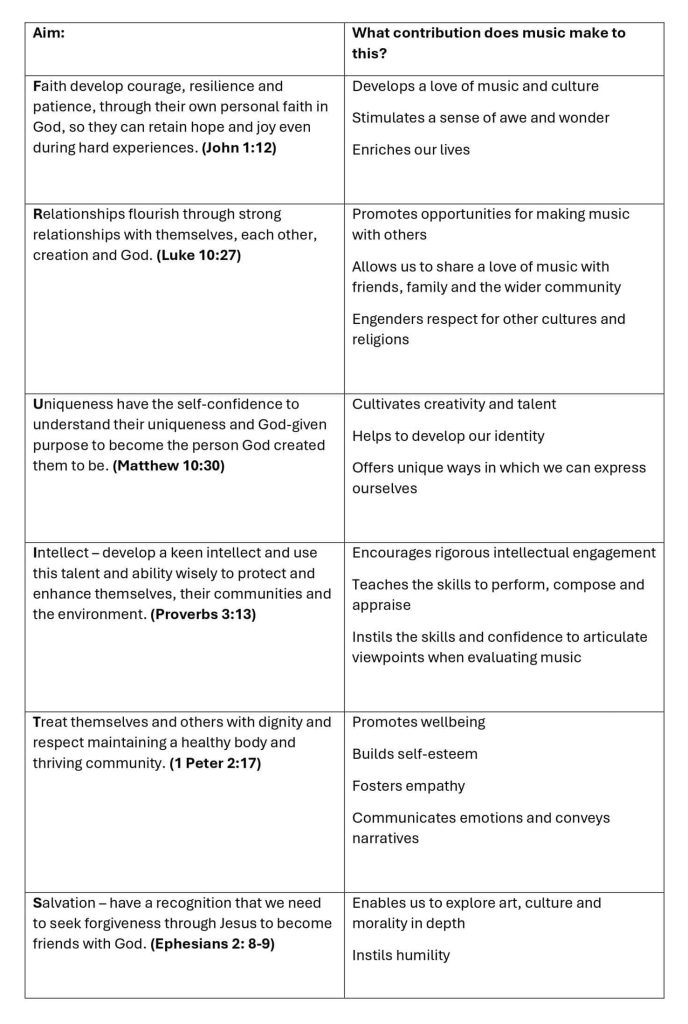
Discover what St Leonard’s students are learning — click the blue links below to view our Music curriculum.

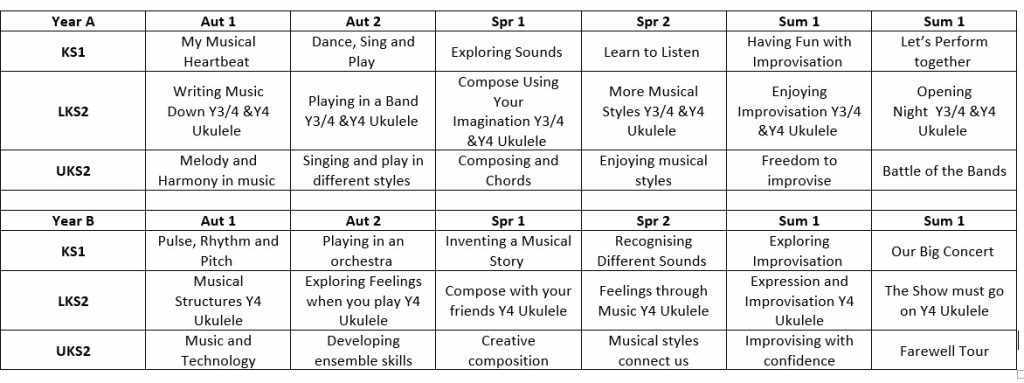
St Leonards uses Charanga Musical School as the foundation for its music curriculum, providing pupils with a structured, engaging, and inclusive approach to learning. Through Charanga’s week-by-week lessons, children experience a cycle of listening, singing, playing instruments, improvising, composing, and performing, all aligned with the National Curriculum and the Model Music Curriculum. This spiral model ensures that key musical skills and concepts are revisited and built upon each year, supporting long-term progression. At St Leonards, the scheme is complemented by singing assemblies, instrumental teaching such as glockenspiel or ukulele, and opportunities for children to perform in choirs, concerts, and community events. By blending Charanga’s digital resources with live music-making and performance, St Leonards provides a rich and inclusive musical education for all pupils, from the Early Years through to Key Stage 2.
St Leonards was proud to be awarded the Music Mark for 2022–2023, a national recognition given to schools that demonstrate a strong commitment to providing high-quality music education. The award celebrates the school’s dedication to ensuring that all pupils have access to a broad and balanced music curriculum, as well as opportunities to sing, play instruments, create, and perform. It reflects the value St Leonards places on music as an essential part of children’s education and wellbeing, and acknowledges the hard work of staff in delivering engaging lessons, often supported by resources such as the Charanga Musical School programme. Being recognised as a Music Mark school highlights St Leonards’ role in championing music not only within the curriculum but also through extra-curricular activities, performances, and community engagement.
Whole school Music overview