

Attendance

We want to “Develop hearts, minds and bodies through Christ’ to enable pupils to flourish, reaching their God-given potential and enable them to experience Life in all its fullness” John 10:10.
But Jesus said, “Let the children alone, and do not hinder them from coming to Me; for the kingdom of heaven belongs to such as these.” Matthew 19:14
This is a successful school and every child plays their part in making it so. We aim for an environment which enables and encourages all pupils to achieve their potential and aspire to excellence.
For our children to gain the greatest benefit from their education it is vital that they attend regularly and every child should be at school, on time, every day the school is open unless they have an unavoidable reason to be absent. Any absence affects the pattern of a child’s schooling and regular absence will seriously affect their learning.
Absence or late arrival also disrupts teaching routines and so may affect the learning of others in the same class.
Government research shows a direct link between attendance and attainment and good attenders also make better progress socially, learn to work with others, and are better prepared for the transition to secondary school and, eventually, higher education, training and employment.
It is very important therefore that you make sure that your child attends regularly and this policy sets out how together we will achieve this. Our attendance target this year is 96%, but all pupils should strive to achieve 100% attendance if they can. Our attendance policy and flow chart can be found on our policy page.
St Leonard’s Church Of England Voluntary Aided Primary School Attendance Policy 2025 2026
Working Together To Improve School Attendance August 2024
Summary Table Of Responsibilities For School Attendance August 2024
Supporting Pupils At School With Medical Conditions


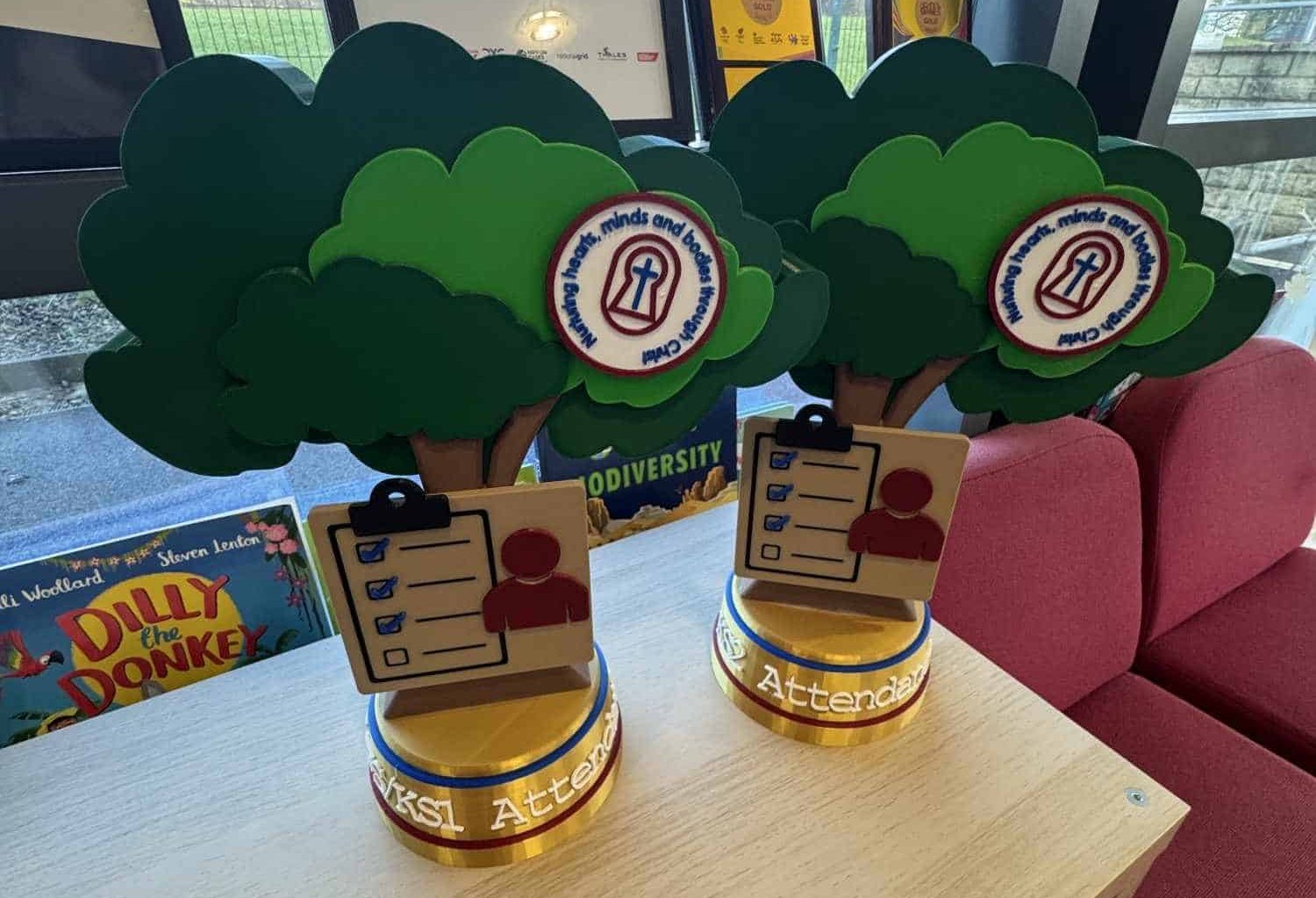
At St Leonard’s, each week during Celebration Assembly, we recognise and reward excellent attendance. One class from either EYFS/KS1 or KS2 with the best attendance for that week will be awarded one of our amazing attendance trophies.

🌟 Half-Termly Hot Spot Days 🌟
We are excited to introduce our Hot Spot Days, taking place once every half term! On these special days, pupils who arrive at school between 8:45am and 9:00am will receive a number and be entered into a class draw.
🎁 One lucky pupil from each class will win a prize from our attendance prize box!
Hot Spot Days are a fun way to celebrate punctuality and encourage great attendance.

At the end of each half term, the class with the best attendance in EYFS, KS1, LKS2 and UKS2 will be rewarded with a special treat afternoon. These celebration afternoons are designed to recognise and encourage excellent attendance and may include activities such as a movie afternoon with sweet treats, a disco in the hall or a pizza party – or even a complete surprise. Each phase will have its own winning class, giving all pupils an exciting incentive to aim for the best possible attendance.
What if my child is too anxious to go to school?
Children can sometimes feel a little bit worried about going to school. Mostly, this is a very normal emotion.
It’s important to recognise that going into school can help children to feel less worried than letting them stay at home.
If your child is anxious over several weeks, talk to their school about how they can support you.
We have put together some useful links on the Education Hub on mental health support which you may find helpful.

Emotionally Based School Avoidance (EBSA)
What is Emotionally Based School Avoidance?
Emotionally Based School Avoidance (EBSA) is a term used to describe children and young people (CYP) who experience challenges in attending school due to negative feelings (such as anxiety).
EBSA is commonly associated with emotional and physical distress, and a reluctance to attend school, which can lead to reduced attendance and further anxiety regarding school.
What can I do if I am worried about my child not wanting to attend school?
Firstly, don’t worry alone, we are here to help. Just give us a call and ask to speak to Mr Daniel O’Connor, Mr Matthew Gaukroger or Mrs Bev Holmes.
Parental guidance
This guidance has been produced by Lancashire Educational Psychology Service and is based on the current evidence base/best practice guidance, as well as understanding of our local context, regarding supportive strategies associated with positive outcomes for pupils with Emotionally Based School Avoidance (EBSA). This has been developed as part of an action research project and incorporates the views and experiences of Lancashire pupils, parents/carers and educational settings. You can also download a print version: Lancashire EBSA Parental Guidance print version
 Visit YOUNGMiNDS, where you can find a range of resources to support your child’s mental health. In particular, their pages on supporting children and young people with school anxiety are worth a look:

The “Worrying about School” is a guide designed to support teachers, parents and carers with supporting children as they return back to school. It is particularly useful for those children who are feeling worried. It offers several strategies for making the return as smooth as possible and calming any anxieties.
Is my child too ill for school?
What to do about other conditions
High temperature
If your child has a high temperature, keep them off school until it goes away.
Feeling anxious or worried
It’s normal for children to feel a little anxious sometimes. They may get a tummy ache or headache, or have problems eating or sleeping.
Avoiding school can make a child’s anxiety about going to school worse. It’s good to talk about any worries they may have such as bullying, friendship problems, school work or sensory problems. You can also work with the school to find ways to help them.
If your child is still struggling and it’s affecting their everyday life, it might be good to talk to your GP or school nurse.
Find information and advice about how to help children with anxiety
Coughs and colds
It’s fine to send your child to school with a minor cough or common cold. But if they have a high temperature, keep them off school until it goes.
Encourage your child to throw away any used tissues and to wash their hands regularly.
Chickenpox
If your child has chickenpox, keep them off school until all the spots have crusted over.
This is usually about 5 days after the spots first appeared.
Cold sores
There’s no need to keep your child off school if they have a cold sore.
Encourage them not to touch the blister or kiss anyone while they have the cold sore, or to share things like cups and towels.
Conjunctivitis
You don’t need to keep your child away from school if they have conjunctivitis, unless they are feeling very unwell.
Do get advice from your pharmacist. Encourage your child not to rub their eyes and to wash their hands regularly.
COVID-19
If your child has mild symptoms, such as a runny nose, sore throat, or slight cough, and feels well enough, they can go to school.
Your child should try to stay at home and avoid contact with other people if they have symptoms of COVID-19 and they either:
- have a high temperature
- do not feel well enough to go to school or do their normal activities
What to do if your child has tested positive
Your child is no longer required to do a COVID-19 rapid lateral flow test if they have symptoms. But if your child has tested positive for COVID-19, they should try to stay at home and avoid contact with other people for 3 days after the day they took the test.
Ear infection
If your child has an ear infection and a high temperature or severe earache, keep them off school until they’re feeling better or their high temperature goes away.
Hand, foot and mouth disease
If your child has hand, foot and mouth disease but seems well enough to go to school, there’s no need to keep them off.
Encourage your child to throw away any used tissues straight away and to wash their hands regularly.
Head lice and nits
There’s no need to keep your child off school if they have head lice.
You can treat head lice and nits without seeing a GP.
Impetigo
If your child has impetigo, they’ll need treatment from a pharmacist or GP, often with antibiotics.
Keep them off school until all the sores have crusted over and healed, or for 48 hours after they start antibiotic treatment.
Encourage your child to wash their hands regularly and not to share things like towels and cups with other children at school.
Measles
If your child has measles, they’ll need to see a GP. Call the GP surgery before you go in, as measles can spread to others easily.
Keep your child off school for at least 4 days from when the rash first appears.
They should also avoid close contact with babies and anyone who is pregnant or has a weakened immune system.
Ringworm
If your child has ringworm, see your pharmacist unless it’s on their scalp, in which case you should see a GP.
It’s fine for your child to go to school once they have started treatment.
Scarlet fever
If your child has scarlet fever, they’ll need treatment with antibiotics from a GP. Otherwise they’ll be infectious for 2 to 3 weeks.
Your child can go back to school 24 hours after starting antibiotics.
Slapped cheek syndrome (fifth disease)
You don’t need to keep your child off school if they have slapped cheek syndrome because, once the rash appears, they’re no longer infectious.
But let the school or teacher know if you think your child has slapped cheek syndrome.
Sore throat
You can still send your child to school if they have a sore throat. But if they also have a high temperature, they should stay at home until it goes away.
A sore throat and a high temperature can be symptoms of tonsillitis.
Threadworms
You don’t need to keep your child off school if they have threadworms.
Speak to your pharmacist, who can recommend a treatment.
Vomiting and diarrhoea
Children with diarrhoea or vomiting should stay away from school until they have not been sick or had diarrhoea for at least 2 days (48 hours).